Nestled at the foot of the largest tropical glacier in the world, the high-mountain community of Phinaya in the Peruvian Andes depends on the glacier’s flow for its residents’ livelihoods. The water from that glacier, the Quelccaya ice cap, sustains the alpaca herders, their families and the herds. But in the last 40 years, the Quelccaya ice cap has lost 37 percent of its total area. A study suggests that the glacier will reach a state of irreversible decline by the mid-2050s.
Beyond this glacial melt, climate change has also brought drought to the region. For the inhabitants of Phinaya, wet fertile grasslands are crucial for their alpacas. Without water, pastures dry out and alpacas die. In a drought that hit the region in 2021, one family lost 60 animals—almost a third of their herd. Families worry about the ability of future generations to continue herding.
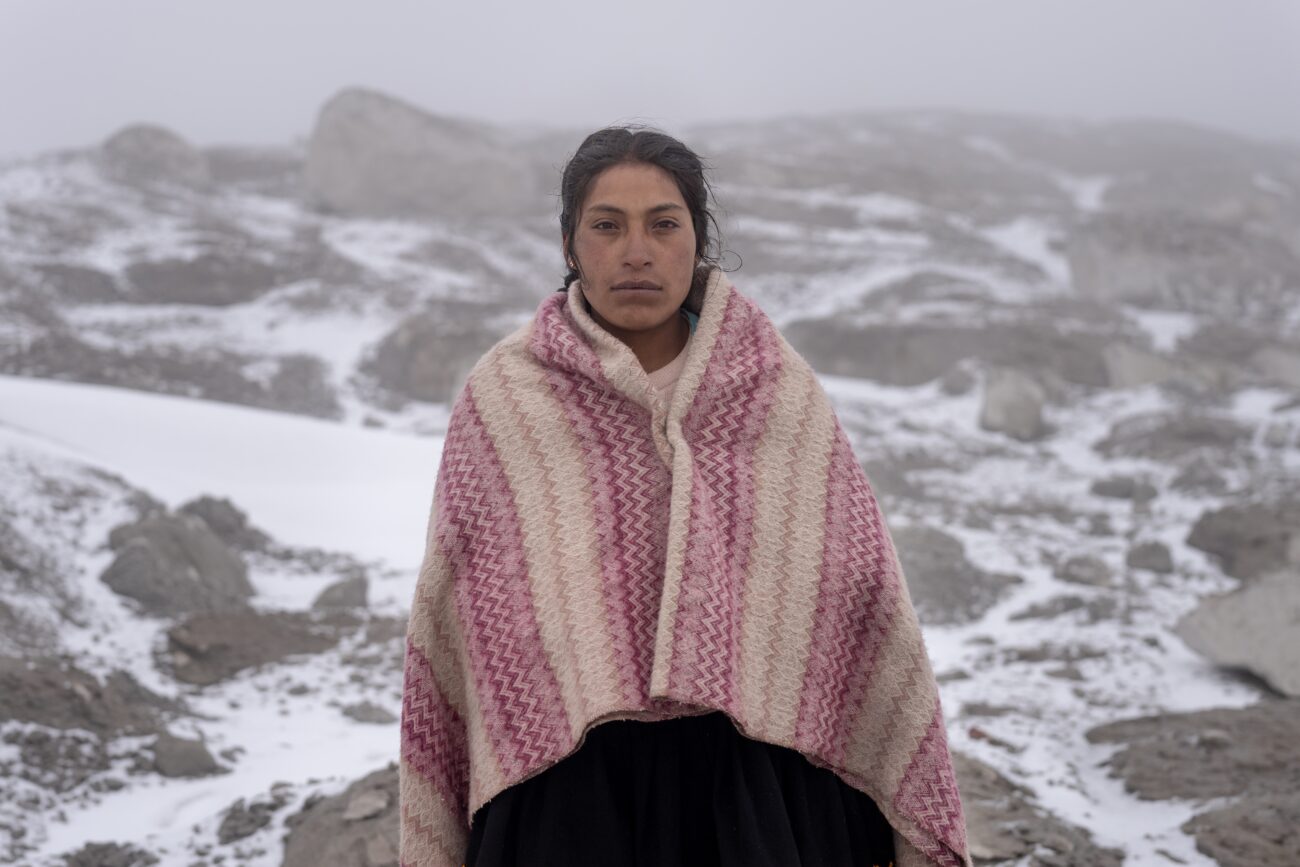
A gallery on the Upper East Side displays the consequences of this climate change in the Phinaya community, from the melting Quelccaya ice cap to an uncertain herding future. In intimate portraits, video and sound installations, photographer Ángela Ponce captures Andean rituals, family ties and the daily life of the Phinayan people amidst the receding glacier. On display at the Instituto Cervantes, Guardians of the Glaciers focuses on the women of Phinaya, like park ranger Yolanda Quispe and her family, and their relationship with the melting Quelccaya glacier. The bright colors of traditional Andean textiles stand in stark contrast to the icy landscapes and dark caves.

In honor of the International Day of Women and Girls in Science, with Ponce’s work as backdrop, Instituto Cervantes hosted a panel on the subject of melting glaciers. Almudena Fernández, UN Development Programme chief economist for Latin America and the Caribbean; Robin Bell, Marie Tharp Lamont Research Professor at Lamont-Doherty Earth Observatory, and Allison Caine, an associate professor in cultural anthropology at the University of Wyoming, all spoke about their experience in the field and the importance of centering women in science. Fernández explained how in a region already affected by melting glaciers, we must “think about human development and climate change together.”
“Latin America and the Caribbean is a region that is highly innovative when it comes to social and environmental policy,” Fernández said. “Bringing resilience to the center of this development can push forward human development and ensure that societies can withstand shocks while continuing to thrive and flourish in times of uncertainty.”
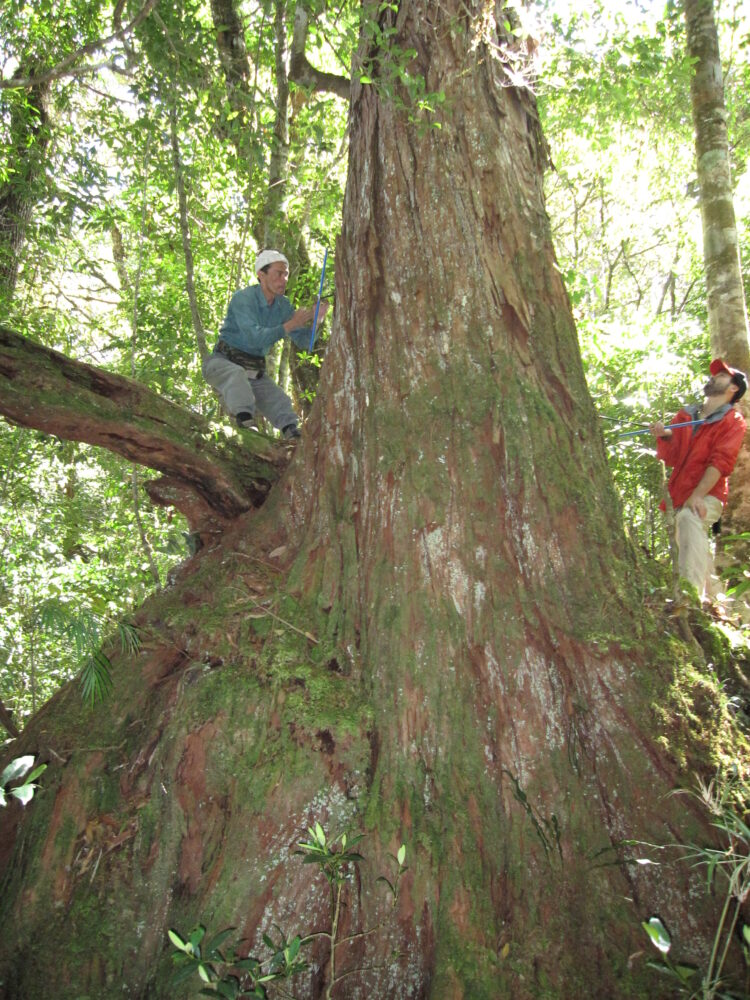
Against the backdrop of Ponce’s photography, Fernández’s discussion of resilience took on extra significance. In one photo, family members pose beside a gnarled queñua tree, “a symbol of resilience to climate change in the Andean highlands, growing at 5,000 meters (16,404 feet) above sea level, where few trees can thrive,” the gallery caption read.

Bell highlighted how much progress women have made in the scientific community. “Here Marie [Tharp] is making a map from data she wasn’t allowed to collect,” she said, pointing to a photo of the renowned geologist. “She changed, fundamentally, the way we thought about our planet.” In 1977, Marie Tharp and her colleague Bruce Heezen published the first map of the floor of the Atlantic Ocean, revealing the vast mountains and canyons of what was previously thought to be smooth terrain. Tharp was later recognized by the Library of Congress as one of the four greatest cartographers of the 20th century.
“But when I got to [Columbia], Tharp was not respected,” added Bell. “She didn’t have a professorship. When I arrived, women were not welcome.” Tharp began working at Columbia’s Lamont Geological Laboratory—now the Lamont-Doherty Earth Observatory—in 1948, 35 years before women were allowed admission into Columbia College. (Lamont-Doherty Earth Observatory is part of the Columbia Climate School.)
“But institutions can change,” Bell continued. “Now, at Columbia, women lead, women run programs, and we honor Marie.”
Women also lead in many parts of the Peruvian highlands, said Caine. She spoke about her time conducting ethnographic research and living in Chillca, a small community 20km to the west of Phinaya. “The women and girls of Chillca are the true knowledge keepers of this region. They are the primary pastoralists, with incredibly rich, detailed, specialized knowledge about animals, grasses and waterways.”

The scientific wisdom of Chillca women “is sadly underrepresented in the literature coming out of this region, and in the development efforts to prepare these communities for futures with increased glacial retreat,” said Caine.
Facing an uncertain climactic future, the panelists advocated for greater recognition of traditional knowledge, especially of women. From the vast knowledge of Phinaya’s herders to Tharp’s groundbreaking glaciology of the 20th century, the panel celebrated women at the forefront of science and advocated for more “voices at the table,” as Bell put it.
“We need to deepen our scientific expertise. We need to broaden what we consider. We need to bring in observers and scientists of the non-classic fabric. We need to make sure the doors are open for women and girls because the more people we have at the table doing science, the better knowledge we have for the future of our planet,” added Bell.

See these photos and more at Ángela Ponce’s exhibit, “Guardians of the Glaciers,” on display until April 1 at the Instituto Cervantes in New York City. Admission is free.